
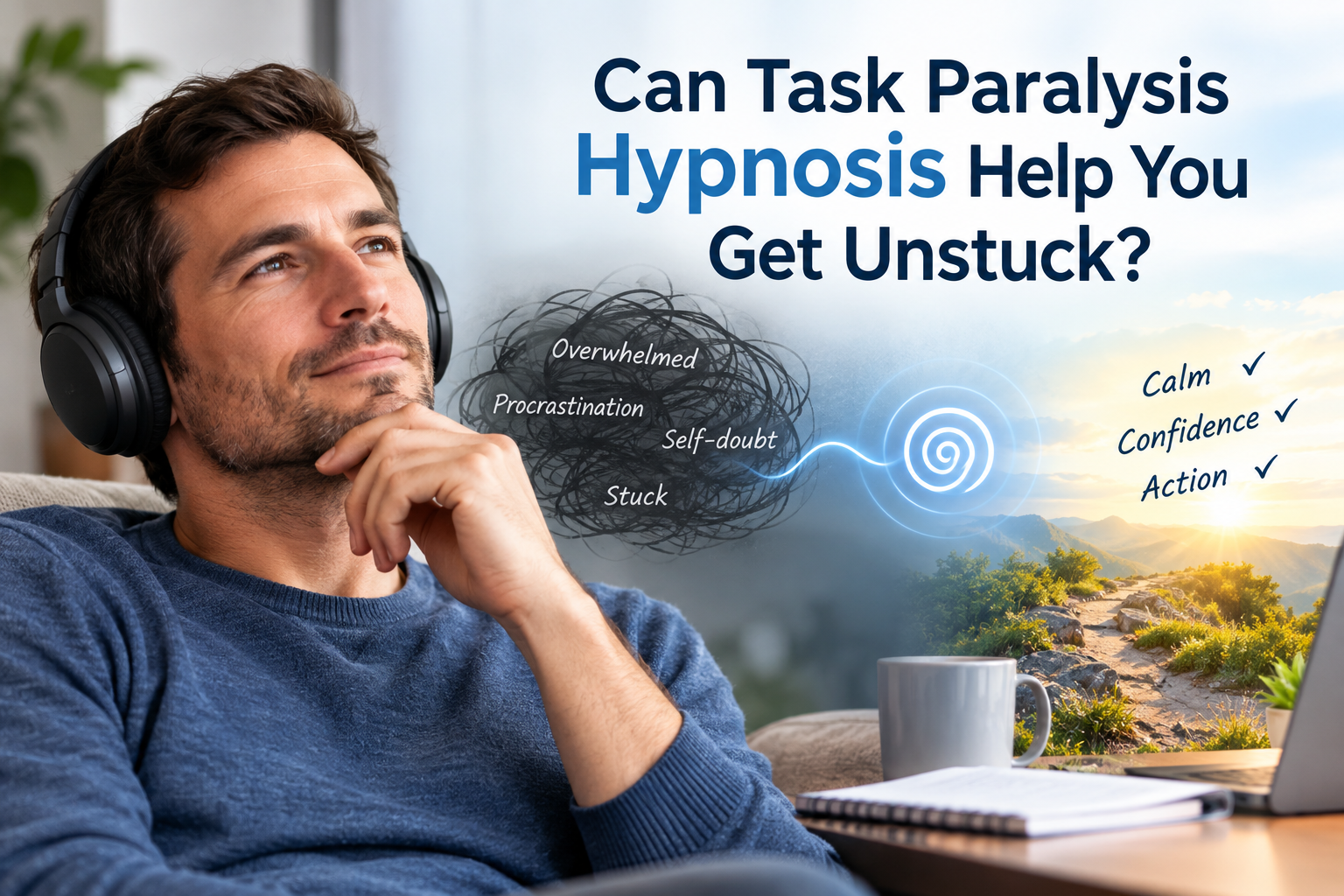
Task Paralysis Hypnosis: How to Get Unstuck and Start Taking Action
By: Tim Nelson
Medically/Clinically Reviewed By: Malcom Blight a qualified clinician
Published: October 10, 2026
Last Updated: October 10, 2026
Important Medical & Affiliate Disclaimer about this post on Task Paralysis Hypnosis
This article is intended for educational and self-improvement purposes only. Hypnosis audio is not a substitute for professional medical advice, diagnosis, or mental health treatment. If persistent difficulty starting tasks is affecting your work, relationships, or daily life, consider speaking with a qualified healthcare professional.
Affiliate disclosure: This article contains an affiliate link to Hypnosis Downloads. My Hypnosis Hub may earn a commission if you purchase through this link, at no additional cost to you. We aim to provide helpful, balanced information so you can make an informed decision.
Quick Summary: Can Task Paralysis Hypnosis Help You Get Unstuck?
Task paralysis hypnosis is a form of guided hypnosis audio intended to help people approach overwhelming tasks with greater calm, confidence, and willingness to take action. It uses relaxation, focused attention, and guided suggestions to encourage a more constructive response to procrastination, self-doubt, and the feeling of being mentally stuck. Although hypnosis may be a useful self-improvement tool for some people, evidence specifically establishing its effectiveness for task paralysis remains limited.
Table of Contents
Key Takeaways at a Glance
| Feature | What You Need to Know |
|---|---|
| Primary goal | Make approaching and starting difficult tasks feel more manageable |
| Best suited to | Adults who experience overwhelm, hesitation, or procrastination |
| Recommended approach | Combine guided audio with small, practical actions |
| Scientific evidence | General hypnosis research is relevant, but direct evidence for task paralysis is limited |
| Recommended audio | Overcome Task Paralysis by Hypnosis Downloads Explore Overcome Task Paralysis Hypnosis Audio |
| Audio duration | 25 minutes and 17 seconds, according to the product listing |
| Format | Digital audio available through the provider |
What Is Task Paralysis?
Have you ever looked at a to-do list, known exactly what needed to be done, and still found yourself unable to begin?
Perhaps an important email remains unanswered. A project deadline is approaching. Your home needs attention, or a personal goal has been sitting on your list for weeks.
You might tell yourself that you will start in five minutes. Then you check your phone, make another cup of coffee, or reorganize something that suddenly seems more urgent.
Before long, the day has passed, the task is still waiting, and the frustration has grown.
This experience is often called task paralysis. It describes a feeling of being unable to initiate a task despite wanting or needing to complete it. It is a descriptive term rather than a formal standalone medical diagnosis.
Task paralysis can have several contributing factors, including:
- Feeling overwhelmed by the size or complexity of a task.
- Perfectionism and fear of making mistakes.
- Uncertainty about the first step.
- Stress, fatigue, or competing demands on attention.
- Difficulties with planning, prioritization, or executive functioning.
For some people, task paralysis occurs alongside ADHD. However, it can also affect people without ADHD, particularly during periods of stress or excessive workload.
Most importantly, struggling to start a task does not automatically mean you are lazy or lack discipline. Understanding what is getting in the way is often more useful than criticizing yourself.
How Can Hypnosis Help With Task Paralysis?
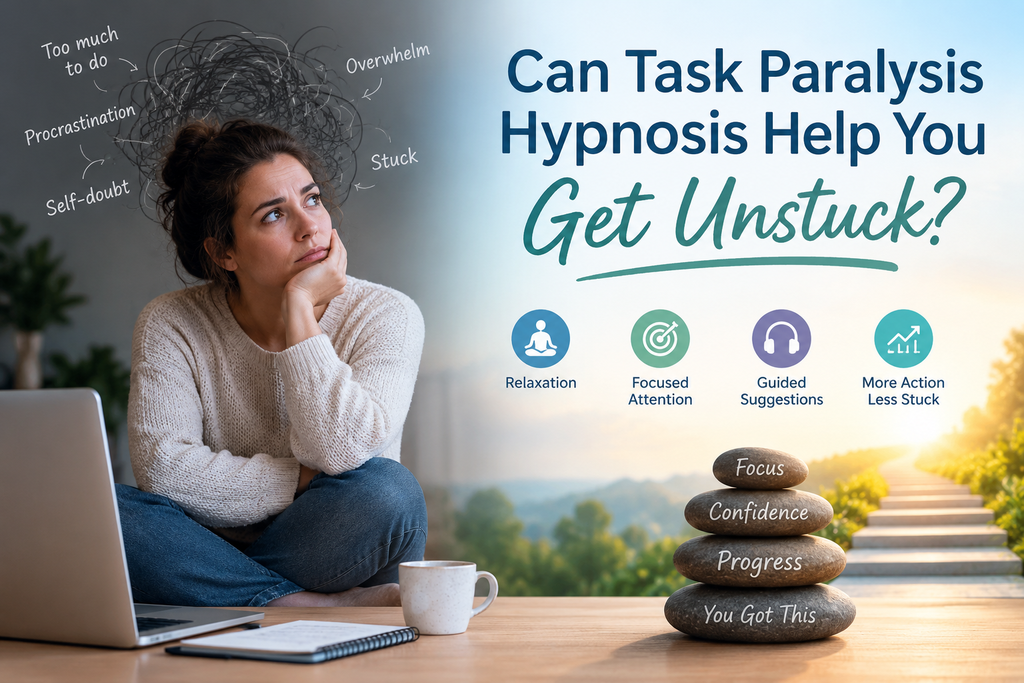
Task Paralysis Hypnosis involves focused attention, reduced awareness of some distractions, and an increased responsiveness to certain suggestions. During a guided session, a narrator may encourage relaxation and help you imagine responding differently to situations that usually trigger avoidance.
For task paralysis, the aim is not to make you productive through magic or to remove every uncomfortable feeling. Instead, hypnosis audio may help you rehearse a calmer, more constructive response to the moment when you would normally freeze or procrastinate. Other Articles that are worth exploring hypnosis for focus and concentration
1. Reducing the Feeling of Overwhelm
When a task feels too large, your attention can become consumed by everything that might go wrong or all the work still ahead.
A guided hypnosis session may encourage you to slow down, settle your attention, and approach the task without treating the entire workload as one enormous problem.
This can create an opportunity to identify one manageable action rather than trying to solve everything at once.
2. Developing a More Supportive Inner Voice
Self-criticism can make procrastination more emotionally difficult.
Thoughts such as “I always leave things too late” or “I never get anything done” can reinforce discouragement. Guided suggestions may encourage a more balanced response, such as recognizing that progress is possible even when motivation is low.
The aim is not unrealistic positive thinking. It is learning to respond to setbacks without making them a reason to give up.
3. Practising a Different Response to Avoidance
Repeated avoidance can become a familiar response to uncomfortable tasks. Hypnosis audio may offer a structured opportunity to imagine approaching those situations with greater composure.
You can reinforce the exercise by choosing a small action immediately afterward. For example, open the document, write the first sentence, or spend five minutes sorting the materials you need.
This practical follow-through matters. Listening alone cannot guarantee that a task will be completed. There are also hypsnosi audios on deep relaxation self-hypnosis
4. Building a Routine Around Getting Started
A consistent routine can make the transition into work easier.
You might listen to a guided session at a suitable time, identify one priority, and then begin a short, manageable work period.
Over time, this routine can become a useful reminder that starting does not require you to feel perfectly prepared.
An important distinction: Hypnosis is not a proven way to bypass the brain’s critical thinking systems or permanently rewire behavior after a set number of listens. Individual responses vary, and the evidence for hypnosis as a specific treatment for task paralysis is not yet established.
Task Paralysis Hypnosis – What Does the Science Say About Hypnosis and Procrastination?
A trustworthy discussion of task paralysis hypnosis should distinguish between what research suggests and what has not yet been demonstrated.
Research into hypnosis has examined a range of applications, including pain management and some psychological symptoms. However, those findings cannot automatically be applied to every self-improvement goal or commercial hypnosis recording.
Task paralysis itself can have different causes. Someone who feels stuck because of perfectionism may need a different approach from someone who is exhausted, experiencing significant anxiety, or struggling with ADHD-related executive functioning.
Research into other behavior-change approaches offers useful context. For example, a randomized study published in Acta Psychologica in 2026 examined mental contrasting with implementation intentions as a way to address academic procrastination. The study reported improvements in willingness to initiate tasks among the participating students. This supports the value of studying practical strategies that connect goals with planned actions, but it was not a trial of hypnosis.
You can read the study through PubMed.
The practical lesson is straightforward: guided hypnosis may be worth exploring as one component of a broader approach, but it should not be presented as a scientifically proven cure for task paralysis.
Five Practical Steps to Overcome Task Paralysis
Whether or not you choose to use hypnosis audio, these five steps can help you turn an overwhelming task into something more approachable.
Step 1: Choose One Task
Write down the task that is causing the most difficulty.
Avoid listing every unfinished responsibility. Choose just one thing to work on now.
For example, instead of writing “finish my business project,” identify a specific action such as “open the project document and review the first page.”
Step 2: Make the First Step Smaller
Ask yourself: What is the smallest useful action I could take in the next five minutes?
You do not need to finish the whole task. You only need to make starting easier.
Examples include:
- Opening the document you need.
- Writing three rough bullet points.
- Replying to one straightforward email.
- Gathering the materials required for a project.
Small steps are useful because they reduce the amount of work you need to mentally confront at once.
Step 3: Set a Realistic Time Limit
Try working for five or ten minutes rather than committing to a long session.
Set a timer if that helps. When the time is up, decide whether to continue, take a break, or adjust your plan.
The purpose is to establish momentum without turning the exercise into another overwhelming obligation.
Step 4: Use a Calming Routine
Before starting, take a few comfortable, unforced breaths. Relax your shoulders and notice where you are holding tension.
You could also use a brief self-hypnosis exercise:
- Sit somewhere comfortable and safe.
- Allow your breathing to settle naturally.
- Imagine approaching the task with a little more patience.
- Picture yourself completing the first small action.
- Open your eyes, orient yourself to the room, and begin.
There is no need to force yourself into a deep trance. If the exercise feels uncomfortable, stop and return to your usual surroundings and activities.
Step 5: Recognize Progress
When you complete the first action, acknowledge it.
You might say, “I have started, and that is progress.”
This helps you focus on what you can control rather than judging yourself by everything that remains unfinished.
If the task still feels impossible, reconsider its size, clarify what is expected, or ask someone for support.
Task Paralysis Hypnosis – Recommended Hypnosis Audio: Overcome Task Paralysis
If you are looking for a professionally produced hypnosis recording specifically focused on getting unstuck, the Overcome Task Paralysis audio from Hypnosis Downloads is a relevant option to consider.
Rather than recommending a generic relaxation recording, this program is explicitly designed around the difficulty of initiating tasks and moving from overwhelm toward focused action.
What Does the Program Offer?
According to the provider’s product page, the session was created by Mark Tyrrell and Roger Elliott, and Roger Elliott is listed as the narrator.
| Product detail | Information |
|---|---|
| Program | Overcome Task Paralysis |
| Provider | Hypnosis Downloads |
| Narrator | Roger Elliott |
| Listed duration | 25 minutes, 17 seconds |
| Format | Digital audio |
| Listed price at the time of research | US$18.95; check the current price on the provider’s page |
| Product focus | Managing overwhelm, reducing self-criticism, and encouraging task initiation |
The provider describes the recording as a way to approach responsibilities with less internal pressure, develop a more supportive mindset, and make it easier to take the first step.
These are the program’s intended benefits, not guaranteed outcomes. You can review the description, listen to the available introduction, and decide whether the approach suits you before purchasing.
Who Might Find This Audio Useful?
This recording may be worth considering if:
- You frequently put off tasks because they feel overwhelming.
- You find it difficult to move from planning to action.
- You want a structured audio exercise focused on productivity rather than relaxation alone.
- You prefer to practise independently at a time that suits you.
It may be less suitable as a standalone solution if your difficulties arise from severe distress, persistent exhaustion, significant executive-functioning difficulties, or an untreated mental health condition. In those circumstances, professional support may be more appropriate.
Our Assessment of the Product
Based on the provider’s published description, the main advantage of this recording is its specific focus on task initiation. Its listed duration of approximately 25 minutes may also make it practical to incorporate into a routine.
We have not independently verified its effectiveness through controlled testing, and we do not claim personal listening experience. Readers should assess the narration, approach, price, and available sample for themselves.
Explore Overcome Task Paralysis
If the program sounds relevant to your needs, visit the official product page for the full description and audio introduction.
Explore Overcome Task Paralysis Hypnosis Audio
Purchasing is optional. You can also begin with the practical strategies in this article and assess whether additional support would be useful.
Can Hypnosis Audio Help With ADHD-Related Task Paralysis?
Some people with ADHD experience difficulties with task initiation, planning, prioritization, or managing competing demands. These difficulties can make ordinary responsibilities feel unusually challenging.
However, task paralysis is not exclusive to ADHD, and experiencing it does not mean you have ADHD.
Hypnosis audio may be explored as a supplementary self-improvement activity if you find guided relaxation and suggestions helpful. It should not be presented as an established treatment for ADHD or as a replacement for evidence-based care.
If difficulties with attention, organization, or starting tasks are persistent and interfere with everyday life, consider discussing them with a qualified healthcare professional. Depending on your circumstances, practical accommodations, structured planning strategies, coaching, or appropriate clinical care may be useful.
How to Get More From a Hypnosis Audio Routine
If you decide to try the recommended recording, approach it as an experiment rather than expecting an immediate transformation.
Choose a suitable time. Listen when you can sit or lie comfortably without needing to monitor your surroundings closely. Never listen while driving or operating machinery.
Set a specific intention. Before starting, identify one task you want to approach differently.
Follow the recording at your own pace. You do not need to force relaxation or assume that you must experience a particular sensation for the session to be useful.
Take action afterward. When the session ends, identify one small next step and put it into practice if appropriate.
Review your experience. Notice whether you found it easier to approach the task, whether the routine was comfortable, and whether the time spent listening was worthwhile.
There is no universally established listening schedule or guaranteed number of sessions for overcoming task paralysis. Follow the provider’s guidance, pay attention to your own response, and discontinue the recording if it causes distress.
Final Thoughts: Moving From Overwhelm to Action
Task paralysis can be frustrating, particularly when you know what needs to be done but cannot seem to begin. The most useful starting point is to replace self-criticism with curiosity: What is making this task difficult, and how could I make the first step easier?
Breaking work into manageable actions, reducing unnecessary pressure, and creating a consistent routine can all help you approach responsibilities more constructively.
Task paralysis hypnosis may be a useful addition for some people who enjoy guided audio and want to practise a calmer response to difficult tasks. The evidence specific to this use remains limited, so it is sensible to combine it with practical strategies rather than rely on it alone.
If you would like to explore a recording created specifically for this challenge, you can read more about Overcome Task Paralysis from Hypnosis Downloads.
Your next step does not have to be enormous. Sometimes, making progress begins with choosing one small thing and allowing yourself to start.
Frequently Asked Questions on Task Paralysis Hypnosis Audio
What is task paralysis?
Task paralysis is the experience of feeling unable to start a task even when you understand that it needs to be done. It can be associated with overwhelm, uncertainty, stress, perfectionism, or difficulties with planning and attention.
Can hypnosis help with task paralysis?
Task Paralysis Hypnosis audio may help some people practise relaxation, manage self-critical thoughts, and approach tasks with a more constructive mindset. However, research specifically establishing hypnosis as an effective treatment for task paralysis is limited, and individual results vary.
Is task paralysis a symptom of ADHD?
Task paralysis is commonly discussed in connection with ADHD, particularly when someone struggles with task initiation or executive functioning. However, it is not exclusive to ADHD and is not, by itself, a diagnostic sign. A qualified healthcare professional can help assess persistent difficulties.
How long does task paralysis hypnosis take to work?
Task Paralysis Hypnosis – There is no established timeframe for results. Some listeners may find a session relaxing or useful immediately, while others may notice little difference. Any change in task initiation or productivity will depend on the individual and the circumstances involved.
Can I use hypnosis audio instead of ADHD treatment or therapy?
No. A self-help recording should not replace an assessment or treatment recommended by a qualified healthcare professional. It may be considered a supplementary activity, provided it is appropriate for your circumstances.
What is the Overcome Task Paralysis hypnosis audio?
Task Paralysis Hypnosis- Overcome Task Paralysis is a guided audio program offered by Hypnosis Downloads. Its stated focus is helping listeners approach overwhelming tasks with less internal pressure and greater willingness to take action. The provider’s page contains the product description and an audio introduction.
What else can I do when I feel unable to start a task?
Choose one task, break it into a small action, and commit to working on it for five minutes. Remove obvious distractions, clarify what needs to happen first, and ask for support if the task remains unmanageable. Persistent difficulties may warrant professional advice.
Is task paralysis the same as procrastination?
Not exactly. Procrastination generally means delaying a task despite expecting that the delay may have negative consequences. Task paralysis describes the feeling of being unable to initiate action. The experiences can overlap, but they do not always have the same underlying causes.