Hypnosis for Noise Sensitivity
Hypnosis for Noise Sensitivity: How to Retrain Your Brain to Hear Trigger Sounds Calmly
By: Tim Nelson | Clinically Reviewed By: Malcom Blight, Certified Clinical Hypnotherapist]
Published: October 10, 2026 | Last Updated: October 10, 2026
Table of Contents
Important Medical & Affiliate Disclaimer:
Content on My Hypnosis Hub is for educational and self-improvement purposes only and is not a substitute for medical diagnosis or psychiatric treatment. If you experience severe neurological distress or unmanaged acoustic trauma, please consult a qualified medical professional.
Disclosure: This article contains affiliate links to verified clinical audio programs. If you purchase through our link to HypnosisDownloads.com, we may earn a small commission at no extra cost to you.
Quick Summary: Does Hypnosis for Noise Sensitivity Really Work?
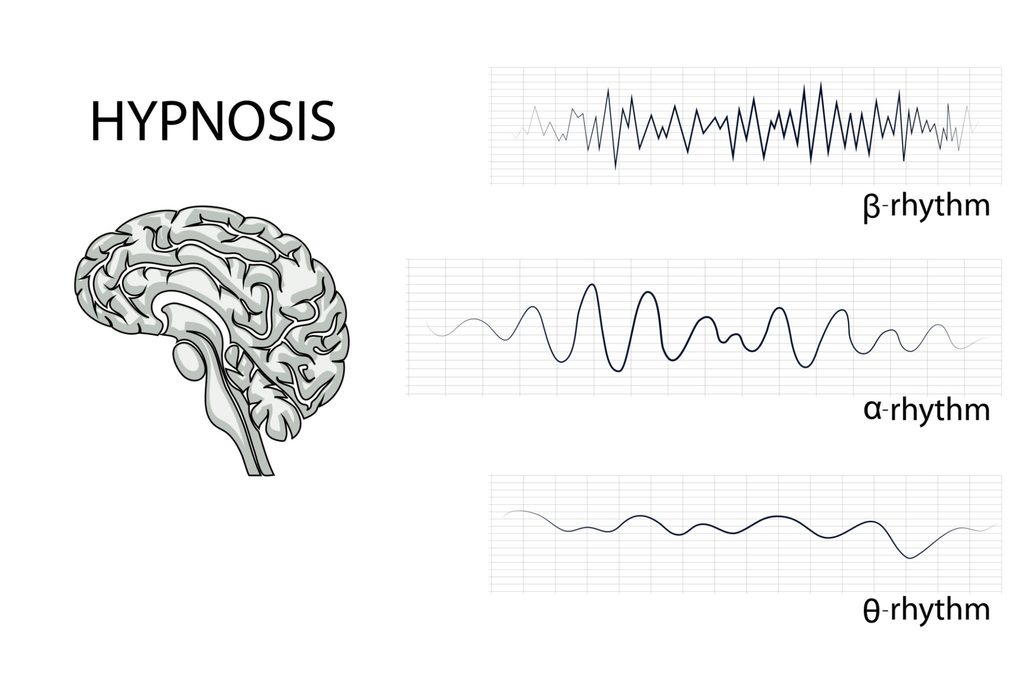
Direct Answer: Hypnosis for noise sensitivity works by reconditioning your subconscious mind’s automatic fight-or-flight reaction to everyday trigger sounds like chewing, clicking, or loud background chatter. By guiding the brain into deeply relaxed alpha and theta brainwave states, hypnosis for noise sensitivity decouples auditory input from emotional panic, allowing your nervous system to process sounds neutrally without physical irritation.
Key Takeaways: Hypnosis for Noise Sensitivity at a Glance
| Feature / Aspect | What You Need to Know |
| Primary Focus Keyword | hypnosis for noise sensitivity |
| Primary Condition Targets | Misophonia, Hyperacusis, and Auditory Overstimulation |
| Core Mechanism | Deconditioning limbic threat spikes in response to everyday background sounds |
| Expected Timeline | Initial physical calm in 1–3 sessions; neural habituation in 2 to 4 weeks |
| Scientific Support | Studies on auditory gating and autonomic nervous system regulation |
| Recommended Session | Overcome Noise Sensitivity Audio (Hypnosis Downloads) |
How Hypnosis for Noise Sensitivity Rewires Your Brain’s Sound Reflex
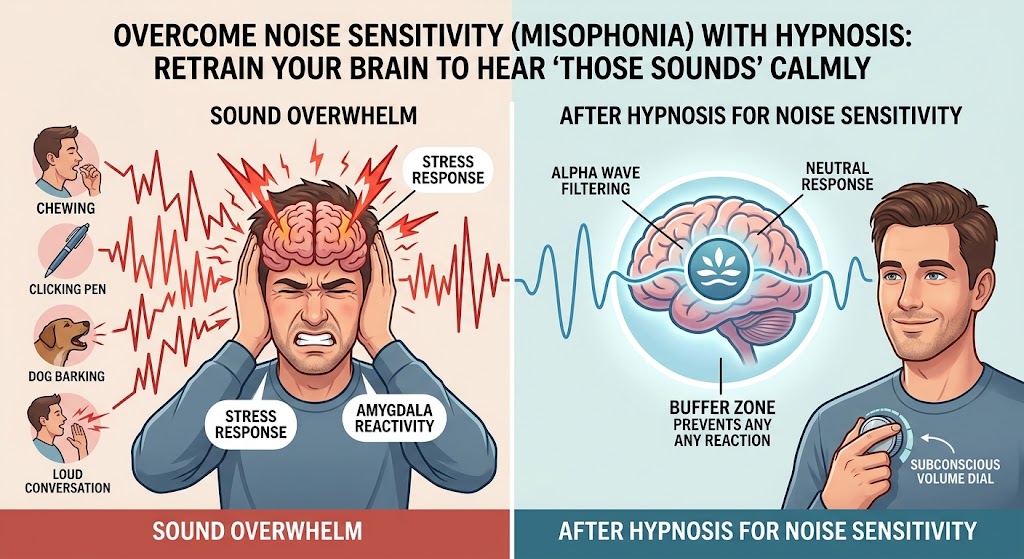
If everyday sounds like crunching chips, typing, or heavy breathing trigger instant anger or anxiety, your brain’s emotional security system is overreacting. In people with heightened sound sensitivity or misophonia, the auditory processing center forms a direct, hyper-reactive pathway to the amygdala—the brain’s threat alert center.
When a trigger sound occurs, your brain misinterprets it as an emergency, releasing adrenaline before you can consciously respond. Hypnosis for noise sensitivity intervenes at this subconscious level to break the automatic reaction chain.
[Trigger Sound] ---> [Auditory Cortex] ---> [Amygdala Threat Spike] ---> [Fight-or-Flight Surge]
                                                    |
                                    [Hypnosis Intercepts Here]
Other reading: Can Hypnosis Help Tinnitus? A New Approach to a Persistent Problem
3 Ways Hypnosis for Noise Sensitivity Restores Auditory Calm
- Lowers Amygdala Reactivity: By pairing the mental representation of trigger sounds with deep muscle relaxation, hypnosis for noise sensitivity neutralizes the emotional charge attached to sound signals.
- Restores Auditory Gating: The brain naturally possesses a filtering mechanism called “auditory gating.” Using hypnosis for noise sensitivity helps re-establish this filter, pushing background noises back into peripheral awareness where they belong.
- Creates a Conscious Buffer Zone: Instead of an instantaneous jump from sound input to emotional distress, hypnosis for noise sensitivity builds an internal pause button, giving you complete emotional control over your response.
Looking for focus Hypnosis for Focus and Concentration: Unlock Your Mind’s Potential
Clinical Study Note: Neuro-imaging research shows that hypnotic suggestion alters functional connectivity between the auditory cortex and the salience network, proving that hypnosis for noise sensitivity changes how the brain prioritizes sensory information.
A 5-Step Self-Hypnosis for Noise Sensitivity Technique You Can Practice Today
You can use this simple self-hypnosis protocol daily to start training your nervous system to remain calm around sound triggers:
- Establish Physical Calm: Sit in a comfortable chair. Take three slow, deep breaths, extending your exhale longer than your inhale to signal safety to your autonomic nervous system.
- Induce Deep Progressive Relaxation: Scan your body from your scalp down to your toes, consciously releasing tension in your jaw, shoulders, and chest.
- Visualize the Master Sound Console: Imagine sitting before an internal audio mixing board with a master volume control slider labeled “Hypnosis for Noise Sensitivity & Auditory Reflex.”
- Re-frame the Trigger Sound in Trance: Bring to mind a mild version of a noise that usually bothers you. As you hear it softly in your imagination, smoothly lower the slider to zero while keeping your breathing slow and steady.
- Anchor Your New Response: Repeat silently: “Sounds are simply neutral vibrations; my nervous system stays calm and relaxed.” Open your eyes when you feel centered.
Recommended Session: Professional Hypnosis for Noise Sensitivity Audio
While self-directed visualization is a great starting point, professionally structured hypnotherapeutic audio provides deeper, targeted subconscious conditioning.
Overcome Noise Sensitivity Session by HypnosisDownloads.com
- Developed By: Qualified Clinical Hypnotherapists (Uncommon Knowledge)
- Format: Instant MP3 Download & Mobile Streaming
- Target Outcome: Systematic subconscious desensitization to trigger noises and misophonia symptoms.
Practical Review
This specific audio download uses gentle reframing techniques rather than forced exposure. Instead of telling you to ignore irritating sounds, the session guides your mind into a receptive trance and systematically changes the way your brain categorizes sound frequencies.
Pros:
- Authored by seasoned hypnotherapy specialists with over 20 years of clinical experience.
- Includes an unconditional 90-day money-back guarantee.
- Delivers gentle, non-triggering auditory retraining.
Cons:
- Requires consistent daily listening with headphones for optimal results.
👉 Listen to an Audio Preview of the Hypnosis for Noise Sensitivity Program Here
Frequently Asked Questions About Hypnosis for Noise Sensitivity
Is hypnosis for noise sensitivity effective for misophonia and hyperacusis?
Yes. Hypnosis for noise sensitivity is especially effective for misophonia because misophonia is driven by an emotional threat response to specific noises. For hyperacusis (physical sound discomfort), hypnosis helps manage the physical anxiety and pain anticipation associated with loud environments.
How quickly does hypnosis for noise sensitivity produce results?
Many individuals feel immediate stress relief after their first session. Lasting neural changes typically occur after listening to a hypnosis for noise sensitivity session daily for 14 to 21 days as new neural pathways strengthen.
Can hypnosis for noise sensitivity cause me to lose control of my hearing?
No. Hypnosis for noise sensitivity does not dull your normal hearing or impair your ability to detect genuine danger. It simply removes the unnecessary fight-or-flight reaction attached to harmless, everyday background noises.
Introduction to overcome Noise Senistivity Video